The History of Vedic Astrology: From the Vedas to Today
The history of Vedic astrology is, before anything else, a history of people watching the sky. Long before there were birth charts or printed almanacs, the priests and poets of ancient India were tracking the Moon through the stars to know when to light a fire and pour an offering. That habit of careful watching, kept alive for thousands of years, is the root of everything we now call Jyotish.
Jyotish means the science of light, and it is one of the oldest continuously practiced systems of astrology anywhere in the world. The story runs from hymns sung around a sacrificial fire to the marble instruments of an eighteenth century observatory and, finally, to the software that draws a chart on your screen in under a second. Across all of that change, the questions stayed remarkably steady. Where are the planets now, where were they when you were born, and what does that pattern mean for a human life?
The Sky in the Vedas: Timekeeping Before Horoscopes
The oldest layer of the tradition is not prediction at all. It is the calendar. The Rig Veda, the earliest of the four Vedas, is a collection of hymns whose dating scholars still debate, with many estimates placing its core in the second millennium before the common era. Inside it are references to the seasons, the year, the months, and the movement of the Sun and Moon. The sky was not decoration. It was the clock that told a community when to act.
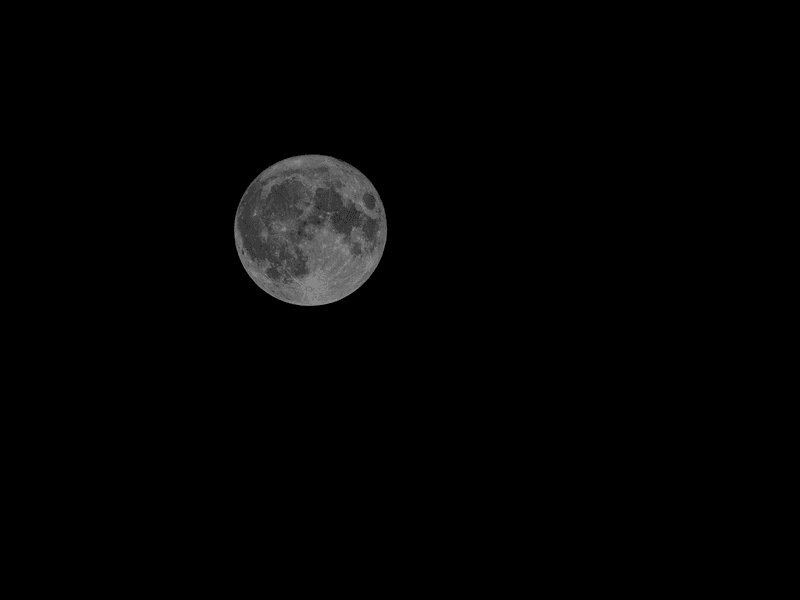
Vedic ritual was tied to exact moments. A sacrifice performed at the wrong time was a sacrifice wasted, so the priests needed to fix the day, the lunar phase, and the position of the Moon among the stars. Out of this practical need grew an early system of the nakshatras, the lunar mansions through which the Moon travels. The familiar count of 27 nakshatras gives the Moon a recognizable home on each night of its roughly month-long circuit, and that lunar framework remains central to Jyotish today.
Astronomy and astrology were one subject
For most of this history there was no clean line between watching the sky and reading meaning into it. Calculating the position of the Moon and interpreting that position were two halves of a single discipline, and the best practitioners were skilled at both.
The Vedanga Jyotisha: A Calendar for the Rituals
The first text we can point to as a recognizable ancestor of Jyotish is the Vedanga Jyotisha. The six Vedangas are the limbs of the Veda, the supporting disciplines a student needed in order to use the Vedas correctly, covering subjects such as phonetics, grammar, meter, and ritual procedure. Jyotisha is the limb concerned with the heavens and with time, and its job was to keep the ritual calendar accurate.
The Vedanga Jyotisha is short and technical. It deals with the length of the year, the lengths of the months, the cycle of the Sun and Moon, and the calculation of tithis and nakshatras so that ceremonies could be scheduled precisely. This is the deep origin of muhurta, the practice of electing an auspicious time, which is still one of the most consulted parts of Jyotish for weddings, business openings, and travel. What the text does not contain is the birth horoscope. There are no twelve houses here, no rasi chart of the kind you would recognize from a modern Kundali. That arrives later.
Two distinct stages
Stage one is calendrical and astronomical: tracking time and the Moon for ritual. Stage two is horoscopic: casting a chart for a person, place, or question. The history of Vedic astrology is largely the story of how the tradition moved from the first to the second without abandoning either.
From Calendar to Chart: The Hellenistic Exchange
The shift toward horoscopy, casting a chart for the moment of a birth and reading it through houses, took shape in the centuries around the start of the common era, during a long period of contact between the Indian world and the Hellenistic Mediterranean. Trade, conquest, and the movement of scholars carried ideas in both directions, and Greek astronomical and astrological material reached India.
A pivotal text from this period is the Yavanajataka, whose title can be read as the astrology of the Yavanas, the Sanskrit term for the Greeks and, more broadly, for people from the Hellenistic west. It is associated with the transmission of horoscopic ideas into a Sanskrit framework. From this exchange the Indian tradition absorbed the twelve-sign zodiac, the rasi chart with its division into twelve houses or bhavas, and house-based prediction, where each house governs a domain of life such as wealth, marriage, or career.
It would be a mistake, though, to read this as Indian astrology simply borrowing a finished product. The incoming ideas were absorbed into an existing, sophisticated lunar tradition and reworked. Critically, Jyotish kept and developed the nakshatras, the planetary period system, and a sidereal way of measuring the zodiac, which sets it apart from the Western approach. If you want a plain walkthrough of how the pieces fit together once the chart took its mature form, our guide on how Jyotish works lays out the moving parts.
Sidereal Versus Tropical: A Lasting Difference
One of the most important inheritances from this formative period is the choice of zodiac. Vedic astrology uses the sidereal zodiac, which is fixed against the actual background stars. Western astrology generally uses the tropical zodiac, which is anchored to the seasons and the equinoxes. Because of a slow wobble of the Earth's axis called the precession of the equinoxes, the two systems drift apart over the centuries, which is why a person can be a Leo Sun in a Western chart and a Cancer Sun in a Vedic one. Neither is a calculation error. They are simply measuring against different reference points, and the sidereal choice is a defining feature of the tradition.
The Classical Synthesis: Parashara and Varahamihira
By the early centuries of the common era the tradition had everything it needed to become the system practiced today, and the great classical works gathered it into a coherent whole. The most influential is the Brihat Parashara Hora Shastra, the large treatise on horoscopy attributed to the sage Parashara. Whether one reads it as the work of a single ancient seer or as a tradition compiled and expanded over a long period, its content is the backbone of mainstream Parashara astrology.
The Brihat Parashara Hora Shastra sets out the machinery that defines a Jyotish reading. It describes the Lagna or ascendant, the rising sign that anchors the chart. It lays out the nine grahas: the Sun, Moon, Mars, Mercury, Jupiter, Venus, Saturn, and the two lunar nodes, Rahu and Ketu. It treats the twelve bhavas and their meanings, the dignity of planets through exaltation and debilitation, planetary drishti or aspects, and the formation of yogas, the special combinations that color a chart. It also gives detailed instructions for the divisional charts, including the Navamsa or D9, read alongside the main Rasi chart, the D1.
From the Sun a person knows the soul, from the Moon the mind. The sages study the grahas to read the unfolding of a life.— Paraphrased from the classical Hora tradition
Perhaps the single most distinctive contribution carried by this classical layer is the Vimshottari dasha, a system of planetary periods spanning 120 years. Rather than reading a birth chart as a fixed snapshot, the dasha system maps which planet governs each stretch of life in sequence, so the same chart unfolds differently at age ten, thirty, and sixty. It is one of the features that makes Vedic astrology so strongly oriented toward timing.
Standing beside Parashara is Varahamihira, who worked around the sixth century of the common era and is one of the few early figures we can place with reasonable confidence. His Brihat Jataka is a concise, elegant manual of birth-chart astrology that has been studied and memorized for centuries. His Brihat Samhita is broader still, an encyclopedia that ranges across astronomy, omens, architecture, gemstones, weather, and agriculture. Varahamihira also openly engaged with the Greek material, citing the Yavanas, which tells us the tradition was confident enough to absorb outside knowledge and credit it.
Medieval Schools, Persian Influence, and Stone Observatories
The tradition did not freeze after the classical age. Commentators expanded the core texts, and regional schools developed their own emphases and techniques across the subcontinent. A notable later layer is Tajika astrology, which absorbed Perso-Arabic methods, especially for annual prediction. The Tajika annual chart, or varshaphala, casts a fresh horoscope for each solar return and uses its own vocabulary of aspects and combinations, a clear sign that the tradition kept taking in new ideas well past its classical foundation.
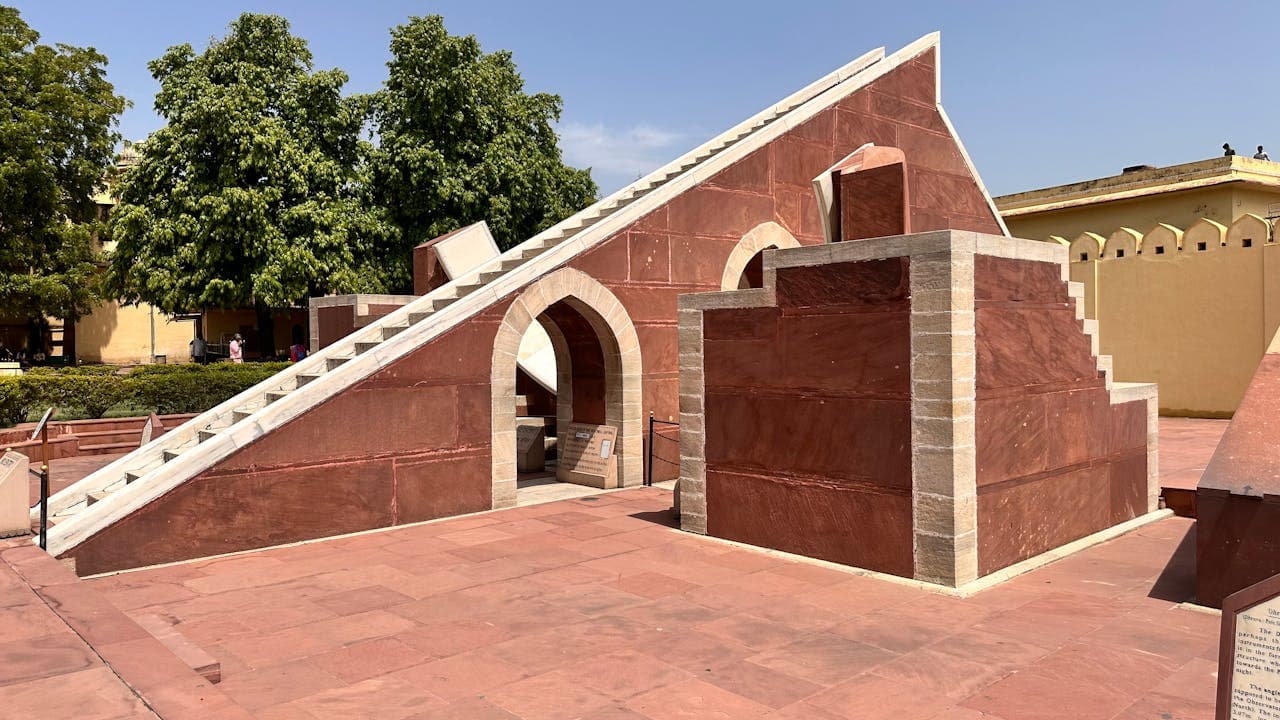
The astronomical side of Jyotish also kept advancing, and nowhere is that more visible than in the great stone observatories. In the early eighteenth century, Maharaja Sawai Jai Singh II built a series of masonry instruments known as the Jantar Mantar, the most famous of which stands in Jaipur. These enormous sundials and measuring instruments, including a giant gnomon for telling time and instruments for tracking celestial positions, were built to refine astronomical tables. They are a reminder that Jyotish always rested on real observation, not guesswork. The historical accuracy of a chart depended on the accuracy of the underlying calculations.
- Classical commentaries that deepened and debated the meaning of the core treatises.
- Tajika and varshaphala methods, carrying Perso-Arabic influence into annual prediction.
- Regional schools and lineages with their own techniques and reading styles.
- Stone observatories such as the Jantar Mantar, built to sharpen astronomical data.
The Colonial Period and the Modern Revival
Under colonial rule, the prestige of traditional learning was challenged, and astrology was often dismissed by official institutions. Yet the practice continued in temples, families, and the daily life of communities, carried in part by the panchanga, the traditional almanac that millions still consult for festivals and auspicious dates. The tradition survived because it was woven into the ordinary rhythm of life, not because any academy protected it.
The twentieth century brought a striking revival, helped along by print. Accurate ephemerides, the tables that list planetary positions day by day, became widely available, which made casting a chart faster and less error-prone. Influential teachers wrote in regional languages and in English, translating and explaining the classical texts for a much larger audience. The hand calculation that once took a skilled practitioner real effort could now lean on printed reference tables, and the knowledge spread well beyond traditional lineages.
A practical note for readers today
Whatever the era, an honest Jyotish reading starts with accurate birth data: the date, the exact time, and the place of birth. Precision there is what lets a chart reflect a real moment in the sky rather than an approximation.
Jyotish in the Digital Age
The latest chapter is computation. What the Jantar Mantar measured in stone, software now derives from the same astronomy in an instant. A modern engine takes your birth details, applies the precise planetary positions, and produces a Lagna, a Rasi chart, a Navamsa, a Vimshottari dasha timeline, and a panchanga, all in moments. The arithmetic that once defined a scholar's training is handled in the background, which frees the astrologer to do the part that still demands a human: interpretation.
That is the line we try to hold. The calculation should be fast and exact, and the meaning should come from a trained person who understands the texts and your life. If you are new to the chart itself, our explainer on what a Kundali is is a good first stop, and you can see the practical flow of getting a reading on our how it works page. When you are ready for a real interpretation, you can find an astrologer to read your chart with the depth this tradition deserves.
It is worth being honest about the limits of what we know. The exact dating of the oldest texts is genuinely uncertain, and serious scholars disagree about timelines and about how much of a given treatise comes from a single author versus a long line of editors. That uncertainty does not weaken the tradition. If anything, it underlines how old and how layered it is. A practice that has been refined across thousands of years, absorbing the calendar of the Vedas, the houses of the Hellenistic world, the synthesis of Parashara and Varahamihira, the methods of later schools, and now the precision of computers, is not a relic. It is a living craft that arrives in your hands largely intact.
Frequently asked questions
- How old is Vedic astrology?
- Its roots reach back to the Vedic period, and the Rig Veda already shows careful attention to the Sun, Moon, and the seasons, with many scholars placing its core in the second millennium before the common era. The horoscopic form, casting a birth chart with twelve houses, took shape later, in the centuries around the start of the common era. Exact dating of the oldest texts remains debated.
- What is the Vedanga Jyotisha?
- The Vedanga Jyotisha is one of the six Vedangas, the supporting disciplines of the Vedas, and it is the limb concerned with time and the heavens. Its purpose was calendrical, fixing the correct timing of rituals through calculations of the Sun, Moon, tithis, and nakshatras. It is the deep ancestor of muhurta, the practice of choosing auspicious times, but it does not yet contain the birth horoscope.
- Did Vedic astrology come from Greek astrology?
- Not exactly. India had a long lunar and calendrical tradition of its own before horoscopy arrived. During a period of contact with the Hellenistic world, Greek horoscopic ideas, including the twelve-sign zodiac and house-based prediction, were absorbed and reworked into a Sanskrit framework, as texts like the Yavanajataka reflect. Jyotish kept its own distinctive features, especially the nakshatras, the dasha periods, and the sidereal zodiac.
- Who was Parashara in astrology?
- Parashara is the sage to whom the Brihat Parashara Hora Shastra is attributed, the large classical treatise that forms the backbone of mainstream Vedic astrology. It sets out the Lagna, the nine grahas, the twelve houses, exaltation and debilitation, aspects, yogas, divisional charts, and the Vimshottari dasha. Whether read as one ancient author or a compiled tradition, its influence on Parashara astrology is enormous.
- What is the difference between Vedic and Western astrology?
- The clearest difference is the zodiac. Vedic astrology uses the sidereal zodiac, fixed against the background stars, while Western astrology generally uses the tropical zodiac, anchored to the seasons. Because of the precession of the equinoxes, the two drift apart, so your Sun sign can differ between the systems. Vedic astrology also relies heavily on the nakshatras and on dasha periods for timing.
- What is the Jantar Mantar and how does it relate to Jyotish?
- The Jantar Mantar is a set of large masonry astronomical instruments built in the early eighteenth century by Maharaja Sawai Jai Singh II, the most famous standing in Jaipur. They were used to measure time and track celestial positions in order to refine astronomical tables. They show that Jyotish always depended on real observation, since the accuracy of a chart rests on accurate planetary data.
- Is Vedic astrology still practiced today?
- Yes, very actively. The tradition survived the colonial period through temples, families, and the everyday use of the panchanga almanac, and it saw a strong revival in the twentieth century with printed ephemerides and teachers writing for wider audiences. Today software handles the calculations instantly, while interpretation remains the work of a trained astrologer.
The pyastro Editorial Team
pyastro pairs the classical Parashari tradition with a precise calculation engine so the astrology you read here matches the charts professional astrologers cast. Every article is reviewed for accuracy against classical Jyotish sources.
Ready to see your own birth chart?
Generate a free, accurate Vedic Kundali and explore your Rasi chart, Navamsa, planetary positions, and dasha periods.