Why People Trust Vedic Astrology: Tradition, Timing, and Meaning
Ask why people trust astrology and you will get very different answers depending on who you ask. A skeptic hears superstition. A grandmother hears the wisdom that helped name her children and set their wedding dates. The honest answer sits somewhere in between, and understanding it is the best way to decide whether Vedic astrology, or Jyotish, has anything useful to offer you. Trust here is not blind. It is built on a tradition thousands of years old, on a system that speaks to specific periods of life rather than vague personality traits, and on countless readings that felt, to the people who received them, strikingly close to the mark.
A Living Tradition, Not a Modern Invention
One reason Vedic astrology earns trust is simply that it has survived. Jyotish is one of the six Vedangas, the limbs of Vedic learning, and its method has been carried forward in a more or less continuous line for a very long time. The foundational text most astrologers still reference, the Brihat Parashara Hora Shastra, is attributed to Sage Parashara. The astronomer-astrologer Varahamihira systematized much of the predictive and astronomical material centuries later. These are not fringe documents. They are the spine of a discipline that families, temples, and scholars have preserved across generations.
That continuity matters psychologically. When a practice has been refined, argued over, and applied by serious people for millennia, it carries a weight that a trend from last year cannot. If you want the full backstory, our piece on the history of Vedic astrology traces how the system developed from Vedic ritual timekeeping into the predictive craft used today. The point for now is this: trust in Jyotish is partly trust in an unbroken chain of teachers.
Why People Trust Astrology When It Is Woven Into Real Life
In much of South Asia, Vedic astrology is not a hobby you pick up. It is present at the hinge moments of a life. A newborn often receives a name whose first syllable is chosen from the nakshatra, the lunar mansion, the Moon occupied at birth. There are 27 nakshatras in the sidereal zodiac, each with its own character, and the one your Moon falls in is considered a kind of emotional signature. Families consult an astrologer to find an auspicious muhurta, an electional window, for a wedding, a house warming, or the start of a business.
Because the practice shows up at births, marriages, and major decisions, it becomes part of the family story rather than an abstract belief. That is a large part of why astrology is popular and why faith in astrology persists even among people who would never call themselves devout. You trust what your grandparents trusted, what was present the day you were named, and what your relatives still turn to before they commit to something irreversible.
Muhurta in one line
Muhurta is the astrological selection of a favorable time to begin something. The idea is not magic but alignment: starting an important act when the planetary climate is supportive, much as a sailor waits for the tide.
The Timing Dimension That Feels Personal
Here is where Jyotish departs sharply from the daily horoscope and where, for many, the real trust begins. Western sun-sign columns describe broad personality types. Vedic astrology is built to answer a different question: not only who you are, but when. Its primary timing tool is the Vimshottari dasha, a 120-year cycle of planetary periods. Each of the nine grahas, the Sun, Moon, Mars, Mercury, Jupiter, Venus, Saturn, Rahu, and Ketu, governs a major period, and these are subdivided again and again into finer sub-periods.
What this means in practice is that an astrologer can look at your chart and say that a particular stretch of years carries the flavor of, for example, Saturn, with its themes of work, delay, discipline, and consolidation, while a later stretch under Jupiter tends toward growth, learning, and opportunity. People find this uncannily relevant because it maps onto how life actually feels, in chapters rather than as a fixed personality. A reading that names the right chapter at the right moment lands very differently from a generic trait list. For a fuller walkthrough of how the chart and these periods are read together, see our explainer on how Jyotish works.
As are the planetary periods, so unfold the results of one's deeds in their proper season.— Brihat Parashara Hora Shastra (on dasha)
Readings That Resonate
Trust is rarely won by theory. It is won by an experience. Many people who arrive at a reading half-skeptical leave unsettled because something specific was named that the astrologer had no ordinary way of knowing. A difficult two-year stretch that matched a debilitated planet's sub-period. A career turn that lined up with the start of a new dasha. The tone of a marriage that echoed the condition of the seventh house, the bhava of partnership, and its lord.
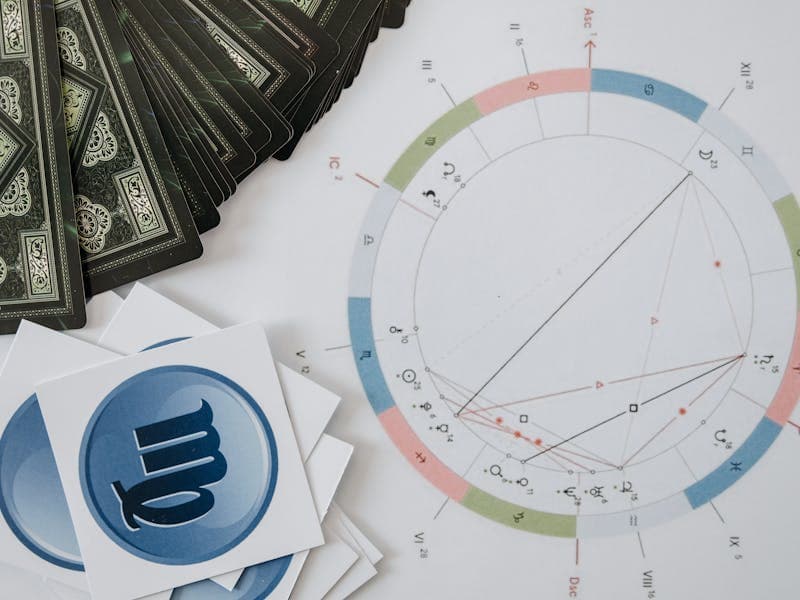
A grounded astrologer reads the whole chart in layers: the Lagna or ascendant and its lord, the placement and strength of each graha, exaltation and debilitation, the drishti or aspects that planets cast on one another, the yogas formed by particular combinations, and the cross-check of the Navamsa, the D9 divisional chart, against the main Rasi chart, the D1. When several of these independent signals point the same way, the reading gains a coherence that is hard to dismiss as coincidence. We should be careful here, because human memory favors the hits and forgets the misses. But the lived experience of a reading that fits is real, and it is the single most common reason individuals say they trust the craft.

Is Vedic Astrology Real? An Honest Answer
We owe you straight talk, because honesty is the only foundation for real trust. Is Vedic astrology real in the sense of being a laboratory science with controlled trials behind it? No. Vedic astrology is a symbolic framework. It is a centuries-old language for thinking about character, timing, and tendency, and it works through interpretation. Two skilled astrologers can read the same chart and emphasize different things, the way two doctors might weigh the same symptoms differently. That interpretive nature is a feature of the tradition, not a flaw being hidden from you.
So does Vedic astrology work? It depends on what you ask of it. As a tool for proving fixed, unavoidable events, it overreaches, and any astrologer who promises certainty is selling something. As a framework for understanding the texture of a period of your life, for naming tendencies you may be living out, and for prompting better-timed decisions, many thoughtful people find it genuinely useful. The classical view supports this humility. The chart describes the field of karma you were born into, the tendencies and seasons, while the choices remain yours.
Where Vedic astrology accuracy comes from
Vedic astrology accuracy depends heavily on two inputs you control: a correct birth time, which sets the Lagna and the dasha sequence, and a qualified astrologer who reads the whole chart rather than cherry-picking. Garbage in, garbage out applies here as much as anywhere.
Taking the Skeptic Seriously
The skeptic deserves a fair hearing, not a dismissal. The strongest objections are real ones. People remember accurate predictions and quietly drop the inaccurate ones. Warm, general statements can feel personal to almost anyone. And no clean, repeatable mechanism connects the position of Saturn to a job loss in the way gravity connects to a falling apple. These are legitimate points, and a serious practitioner holds them in mind.
At the same time, dismissing the entire tradition as mere superstition misses what it has actually offered millions of people for centuries: a structured way to reflect, a vocabulary for the seasons of a life, and a sense of agency during uncertainty. You do not have to believe planets exert a physical force to find value in a careful reading, any more than you have to believe a parable is literally true to learn from it. The most defensible position, and the one we hold, is that Vedic astrology is best treated as guidance and self-reflection, never as a substitute for medical, legal, or financial advice.
Meaning, Perspective, and a Sense of Agency
There is a deeper human reason behind why astrology is popular, and it has little to do with prediction. People reach for it in the seasons when life feels uncertain: a job lost, a marriage in question, a child struggling, a path that has gone foggy. In those moments a chart offers something rare, which is perspective. It reframes a hard year not as random punishment but as a phase with a beginning, a middle, and an end. That reframing can restore a sense of agency, the feeling that you can act wisely within your circumstances rather than simply being battered by them.
This is not escapism when it is done well. A good reading tends to make people more deliberate, not more passive. It says, in effect, the next eighteen months favor patience and building, so plant rather than gamble. Or it says, this window is open, so move. Used this way, trust in Jyotish is really trust in a tool for reflection, and that is a healthy thing to trust.
How to Use Vedic Astrology Wisely
If this honest picture has earned a measure of your trust, the practical question is how to engage with it well. The difference between a reading that helps and one that misleads usually comes down to a few simple disciplines.
- Get an accurate birth time. The Lagna and the entire dasha timeline depend on it. If you are unsure of the minute, say so, and ask whether the chart can be rectified.
- Choose a qualified astrologer who reads the whole chart and explains the reasoning rather than issuing verdicts. Avoid anyone who guarantees outcomes or pressures you toward expensive remedies.
- Treat predictions as tendencies and timing, not certainties. The question to bring is what does this period favor, not what is fixed to happen to me.
- Use the reading for reflection and better decisions. Let it sharpen your judgment; do not hand your judgment over to it.
When you are ready, you can find an astrologer on pyastro whose approach matches the values above, and our short guide to how it works walks through what a first reading involves. Trust, in the end, is not something we ask you to grant in advance. It is something a careful tradition, an accurate chart, and an honest reading can earn, one conversation at a time.
Frequently asked questions
- Why do so many people trust Vedic astrology?
- Because it is a living tradition carried for thousands of years, woven into real life events like naming children and choosing wedding dates, and built around timing through the Vimshottari dasha that feels personal. Many people also trust it because a specific reading once resonated, and because it was passed down through their family. The trust is cultural, experiential, and practical at once.
- Is Vedic astrology real?
- Vedic astrology is real as a centuries-old symbolic framework and a matter of faith and interpretation, but it is not a laboratory science with controlled trials behind it. It offers a structured language for character, timing, and tendency rather than proof of fixed events. A good astrologer treats it as guidance, not as certainty.
- Does Vedic astrology actually work?
- It depends on what you ask of it. As a tool for naming tendencies, understanding the texture of a life period, and making better-timed decisions, many thoughtful people find it genuinely useful. As a way to prove unavoidable events, it overreaches, and anyone promising certainty should be treated with caution.
- What makes Vedic astrology different from horoscope columns?
- Daily sun-sign columns describe broad personality types, while Vedic astrology focuses on when through the Vimshottari dasha, a 120-year cycle of planetary periods. It reads a full birth chart, including the Lagna, all nine grahas, the houses, and the Navamsa divisional chart. This timing dimension is why readings often feel specific rather than generic.
- What affects Vedic astrology accuracy the most?
- Two inputs matter most: an accurate birth time, which sets the Lagna and the dasha sequence, and the skill of the astrologer reading the whole chart. A wrong birth time can shift the ascendant and timeline entirely. Choosing a qualified, transparent astrologer is just as important as the chart itself.
- Can I trust Vedic astrology if I am a skeptic?
- You can engage with it usefully without abandoning your skepticism. Treat it as a framework for reflection and self-understanding rather than a science of fixed outcomes, and notice the misses as well as the hits. Used as guidance, not as a substitute for medical, legal, or financial advice, it can offer perspective even to a careful skeptic.
- How should I prepare for my first reading?
- Gather your accurate date, time, and place of birth, and bring an honest question about timing or direction rather than asking for a guaranteed outcome. Choose an astrologer who explains the reasoning behind the chart, and approach the predictions as tendencies you can act on wisely. Use the session to sharpen your own judgment, not to replace it.
The pyastro Editorial Team
pyastro pairs the classical Parashari tradition with a precise calculation engine so the astrology you read here matches the charts professional astrologers cast. Every article is reviewed for accuracy against classical Jyotish sources.
Ready to see your own birth chart?
Generate a free, accurate Vedic Kundali and explore your Rasi chart, Navamsa, planetary positions, and dasha periods.