How Jyotish Works: The Study and Logic Behind Vedic Astrology
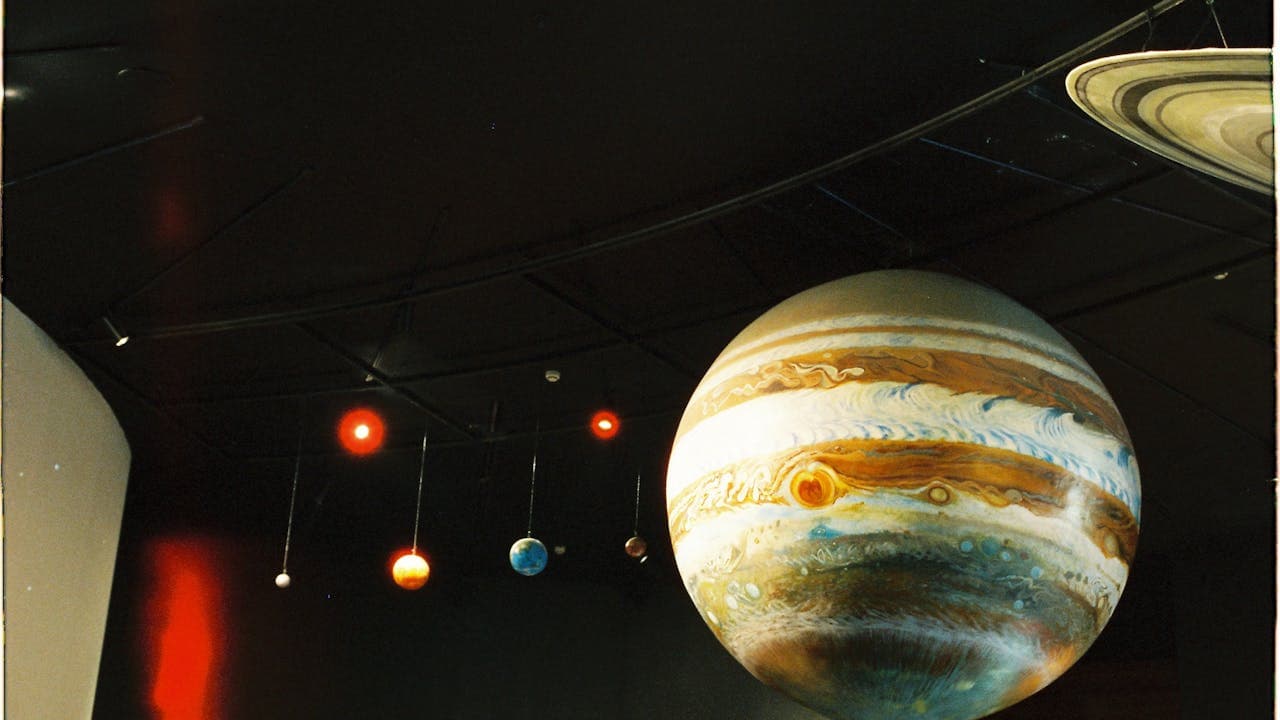
To understand how Jyotish works, start with the word itself. Jyotish comes from jyoti, meaning light, and it is often translated as the science or study of light. Vedic astrology reads the sky as a clock and a map at once, tracking where the Sun, Moon, and planets sit against the fixed stars and reading those patterns as patterns in time. It is less a forecast machine than a language for describing the timing and texture of a life.
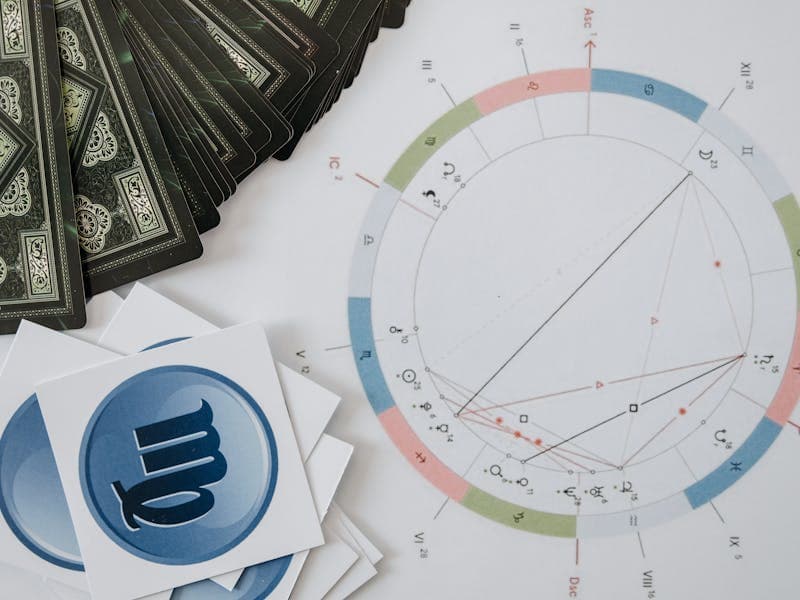
What is Jyotish in practice? It is a system that takes one precise moment, usually your birth, and freezes the sky as it was. From that frozen sky it builds a diagram of signs, houses, and planets, then layers a timing scheme on top so you can see not only what your chart suggests but roughly when those themes tend to surface. The logic is old, internally consistent, and surprisingly mathematical once you look past the symbolism.
The Sidereal Zodiac and Why Jyotish Subtracts the Ayanamsa
The first place Vedic astrology parts ways with the Western tradition is the zodiac itself. Western astrology mostly uses the tropical zodiac, which is anchored to the seasons. In that system, zero degrees of Aries is defined as the spring equinox, the moment the Sun crosses the celestial equator going north, regardless of which stars sit behind it.
Jyotish uses the sidereal zodiac instead, which is anchored to the actual constellations. The signs stay tied to the background stars rather than to the seasons. This matters because of a slow wobble in Earth's axis called the precession of the equinoxes. Over roughly 25,800 years the equinox point drifts all the way around the zodiac, so the seasonal zero point and the stellar zero point have pulled apart over the centuries.
The gap between the two zodiacs is called the ayanamsa. To convert a tropical position into a sidereal one, an astrologer subtracts the ayanamsa, which is currently around twenty four degrees. So a person the Western chart calls a late Aries Sun is frequently a Pisces Sun in a Vedic chart. Neither system is wrong about the sky. They are measuring two different reference frames, and Jyotish chose to keep the planets pinned to the stars they are actually moving through.
Sidereal vs tropical in one line
Tropical astrology anchors the zodiac to the seasons; sidereal Jyotish anchors it to the fixed stars and subtracts the ayanamsa, the accumulated drift from precession, to get there.
The Nakshatras: Twenty Seven Moon Mansions
If the twelve rasis, or signs, are the broad strokes, the nakshatras are the fine detail. Jyotish divides the same circle of the zodiac into twenty seven equal segments called nakshatras, often translated as lunar mansions or star clusters. Each spans a little over thirteen degrees, and each carries its own ruling planet, symbol, and character. They are named for the stars that mark them, from Ashwini at the start of sidereal Aries through to Revati at the end of Pisces.
Why twenty seven? The number tracks the Moon. The Moon takes roughly twenty seven days to circle the zodiac, so it spends about one day in each nakshatra. This is the heart of why the Moon looms so large in Vedic astrology. Where Western astrology often leads with the Sun sign, Jyotish leans heavily on the Moon and on its nakshatra. The Moon is treated as the significator of the mind, emotion, and the receptive part of us, and its nakshatra at birth, the janma nakshatra, shapes everything from your daily temperament to the starting point of your timing cycle.
The nakshatras also feed the practical machinery of Jyotish. They drive electional astrology, which is the art of choosing favorable moments, and they sit at the center of compatibility analysis, where the classical guna milan method scores a match out of thirty six gunas based largely on the two Moons and their nakshatras. If you ever look at a Kundali and what its symbols mean, the nakshatra of your Moon is one of the first things a careful reader checks.
The Nine Grahas as Karakas
Jyotish works with nine grahas. The word graha means seizer or one who grasps, which tells you something about how the tradition views planetary influence. The nine are the Sun (Surya), the Moon (Chandra), Mars (Mangala), Mercury (Budha), Jupiter (Guru), Venus (Shukra), Saturn (Shani), and the two lunar nodes, Rahu and Ketu. The nodes are not physical bodies but the two points where the Moon's path crosses the Sun's, the spots where eclipses happen, and Jyotish treats them as full participants.
Each graha is a karaka, a significator of certain themes. This is the symbolic vocabulary the whole system speaks in. In broad terms:
- Sun: the self, vitality, the father, authority, and the soul.
- Moon: the mind, emotion, the mother, and comfort.
- Mars: energy, courage, drive, conflict, and siblings.
- Mercury: intellect, speech, commerce, and analysis.
- Jupiter: wisdom, expansion, teachers, children, and fortune.
- Venus: love, beauty, art, pleasure, and relationships.
- Saturn: discipline, limitation, time, labor, and endurance.
- Rahu: ambition, obsession, the unconventional, and the foreign.
- Ketu: detachment, spirituality, loss, and the past.
A graha never works in isolation. Its meaning shifts with the sign it occupies, the house it sits in, the company it keeps, and the planets that aspect it. Reading a chart is largely the work of holding all of those modifiers at once and seeing where the story converges.
The Twelve Bhavas and the Lagna
The grahas are the actors. The bhavas, or houses, are the stages. Jyotish divides the chart into twelve bhavas, each governing an area of life. The first house is the most important anchor of all, the Lagna or ascendant, which is the sign rising on the eastern horizon at the moment of birth. Because the Earth turns once a day, the Lagna changes roughly every two hours, which is why an accurate birth time matters so much.
The houses run in a fixed order of meaning. The first is the self, body, and overall life direction. The second is wealth, family, and speech. The third is courage and siblings. The fourth is home, mother, and inner peace. The fifth is children, creativity, and intelligence. The sixth is health, debt, and enemies. The seventh is partnership and marriage. The eighth is transformation, longevity, and hidden things. The ninth is fortune, dharma, and the father or guru. The tenth is career and public standing. The eleventh is gains and networks. The twelfth is loss, expense, foreign lands, and liberation.
A graha takes on the affairs of the house it sits in and the houses it rules. Jupiter in the seventh house, for example, colors partnership and marriage with the qualities of wisdom and expansion. To see how this layering reads in practice, our guide on how to read your birth chart walks through the same Lagna, planet, and house logic step by step.
Dignity, Aspects, and Combinations
Three more ideas tie the grammar together. The first is dignity. Each graha rules certain signs, where it feels at home, and each has a sign of exaltation, where it is strongest, and an opposite sign of debilitation, where it is weakest. The Sun rules Leo and is exalted in Aries, debilitated in Libra. Saturn is exalted in Libra and debilitated in Aries. Dignity tells you how comfortably a planet can deliver its significations.
The second is drishti, the system of aspects. In Vedic astrology a planet casts its gaze, and that gaze affects whatever it falls on. Every graha aspects the seventh house from itself. Beyond that, the tradition gives Mars, Jupiter, and Saturn special aspects: Mars looks to the fourth and eighth as well, Jupiter to the fifth and ninth, and Saturn to the third and tenth. Drishti is how planets that sit far apart in the chart still influence each other.
The third is yogas, specific combinations of planets, houses, and signs that classical texts identify as carrying particular results. A Gajakesari yoga formed by Jupiter and the Moon, or a Raja yoga formed by the lords of favorable houses joining, are among hundreds described in the literature. Yogas are where the system becomes interpretive rather than mechanical, and where the experience of a good astrologer earns its keep.
As are the planets, so is the result; the wise should declare the fruits of the houses through the strength and weakness of their lords.— Brihat Parashara Hora Shastra (paraphrased)
Vimshottari Dasha: The Timing Engine
A natal chart describes potential. What makes Jyotish predictive in time is the dasha system, and the most widely used of these is the Vimshottari dasha. This is a cycle of planetary periods that runs across a span of one hundred twenty years. Each of nine grahas is assigned a number of years, and the chart unfolds through them in a fixed sequence.
The starting point is set by the Moon's nakshatra at birth, which is the reason the janma nakshatra matters so much. The large periods are called mahadashas, and they range from six years for the Sun up to twenty years for Venus and nineteen for Saturn. Inside each mahadasha runs a nested sequence of sub-periods called antardashas, and inside those run still smaller periods. So at any given moment your life is being colored by a planet, a sub-planet, and a sub-sub-planet at once, layered like hands on a clock.
- The Moon's birth nakshatra fixes which mahadasha you are born into and how much of it remains.
- Mahadashas then proceed in the fixed Vimshottari order, each lasting its assigned number of years.
- Within each mahadasha, antardashas of every planet run in turn, scaling the same proportions down.
- An astrologer reads the natal promise of each ruling planet to judge the theme of a period.
Why timing is the point
Two people can share a similar chart yet live very different decades, because their dasha sequences begin from different Moon nakshatras. Jyotish is built to answer not only what but when.
Is Jyotish a Science? An Honest Answer
It is fair to ask whether astrology is a science, and the honest answer deserves more care than a yes or no. Jyotish is astronomically precise in its inputs. The positions of the grahas, the ayanamsa, the rising sign, the dasha math, all of it is calculated from real ephemeris data and would satisfy any astronomer about where the planets are.
What Jyotish does with those positions is a different matter. The interpretive layer, the idea that Saturn in the tenth house or a Venus dasha carries specific meaning for a life, is symbolic and observational rather than a claim verified by controlled laboratory physics. It is a system built over many centuries by sages and astrologers, refined against generations of observed cases, and recorded in texts attributed to Sage Parashara, whose Brihat Parashara Hora Shastra remains foundational, and to Varahamihira, whose works systematized much of the practice. That long record of pattern-matching is real, but it is not the same thing as a tested physical mechanism, and a responsible practitioner does not pretend otherwise.
Used well, Jyotish is a tool for self-understanding, for naming the seasons of a life, and for timing decisions with more awareness. It works best as a mirror and a calendar, not as fate carved in stone. The tradition itself leaves room for free will, effort, and remedy. We think the right posture is curiosity without overclaiming: take the patterns seriously, hold the predictions lightly, and notice what rings true. For a sense of how deep and deliberate that tradition runs, the history of Vedic astrology is worth reading alongside this piece.
How a Modern Engine Computes All of This
Everything above used to take an astrologer hours of hand calculation with an ephemeris and tables. A modern Jyotish engine does the arithmetic in milliseconds. From a birth date, exact time, and place, it computes precise planetary longitudes, applies the chosen ayanamsa to convert to the sidereal zodiac, locates the Lagna and the twelve house cusps, places every graha by sign, house, and nakshatra, and then unrolls the full Vimshottari dasha tree to whatever depth you need.
That precision is the whole point of doing it by machine. A two minute error in birth time can shift the Lagna into the next sign and rearrange the houses. The same accuracy lets an engine generate the divisional charts, such as the Rasi chart (D1) and the Navamsa (D9), and produce a daily Panchanga and almanac for electional work. The symbolism is ancient, but the calculation underneath is just careful astronomy, and getting it exactly right is what lets the rest of the reading stand on solid ground.
If you remember one thing about how Vedic astrology works, let it be this: Jyotish maps real positions in a real sky, reads them through a centuries-old symbolic vocabulary, and uses the dasha clock to place those meanings in time. Understand those three moves, the sidereal map, the planetary grammar, and the timing engine, and the rest of the system becomes far easier to follow.
Frequently asked questions
- What does Jyotish mean?
- Jyotish comes from the Sanskrit jyoti, meaning light, and is usually translated as the science or study of light. It refers to the Vedic tradition of reading the positions of the Sun, Moon, and planets against the fixed stars. The practice is also called Vedic astrology in English.
- How is Vedic astrology different from Western astrology?
- The biggest difference is the zodiac. Vedic astrology uses the sidereal zodiac, tied to the actual constellations, while Western astrology mostly uses the tropical zodiac, tied to the seasons. Jyotish subtracts the ayanamsa, the drift caused by the precession of the equinoxes, which is why your Vedic Sun sign is often one sign earlier than your Western one. Jyotish also leans heavily on the Moon, the nakshatras, and the dasha timing system.
- What is the ayanamsa?
- The ayanamsa is the angular gap between the tropical and sidereal zodiacs, caused by the slow wobble of Earth's axis known as the precession of the equinoxes. It is currently around twenty four degrees and grows slowly over time. Vedic astrologers subtract it from tropical positions to keep the signs aligned with the stars.
- Why are the nakshatras and the Moon so important in Jyotish?
- The zodiac is divided into twenty seven nakshatras, or lunar mansions, because the Moon takes about twenty seven days to circle it and spends roughly a day in each. The Moon represents the mind and emotions in Jyotish, and its birth nakshatra sets the starting point of your Vimshottari dasha cycle. That is why Vedic astrology often leads with your Moon sign and nakshatra rather than your Sun sign.
- What is the Vimshottari dasha?
- The Vimshottari dasha is the main timing system in Jyotish, a one hundred twenty year cycle of planetary periods. Each of the nine grahas rules a major period called a mahadasha, with nested sub-periods called antardashas inside it. The cycle begins from the Moon's nakshatra at birth, which lets an astrologer judge not only the themes in a chart but roughly when they are likely to come forward.
- Is Jyotish a science?
- Its inputs are astronomically precise, since planetary positions, the ayanamsa, and the dasha math are all calculated from real data. The interpretive layer, however, is a symbolic and observational tradition refined over centuries rather than a tested physical mechanism. It is best understood as a time-tested system for self-understanding and timing, not as laboratory physics, and a careful practitioner does not overclaim.
- Who founded Vedic astrology?
- Jyotish has no single founder, but the tradition credits Sage Parashara, whose Brihat Parashara Hora Shastra is its foundational text, and Varahamihira, who systematized much of the practice in works such as the Brihat Jataka. The knowledge was passed down and refined over many generations of astrologers.
The pyastro Editorial Team
pyastro pairs the classical Parashari tradition with a precise calculation engine so the astrology you read here matches the charts professional astrologers cast. Every article is reviewed for accuracy against classical Jyotish sources.
Ready to see your own birth chart?
Generate a free, accurate Vedic Kundali and explore your Rasi chart, Navamsa, planetary positions, and dasha periods.